
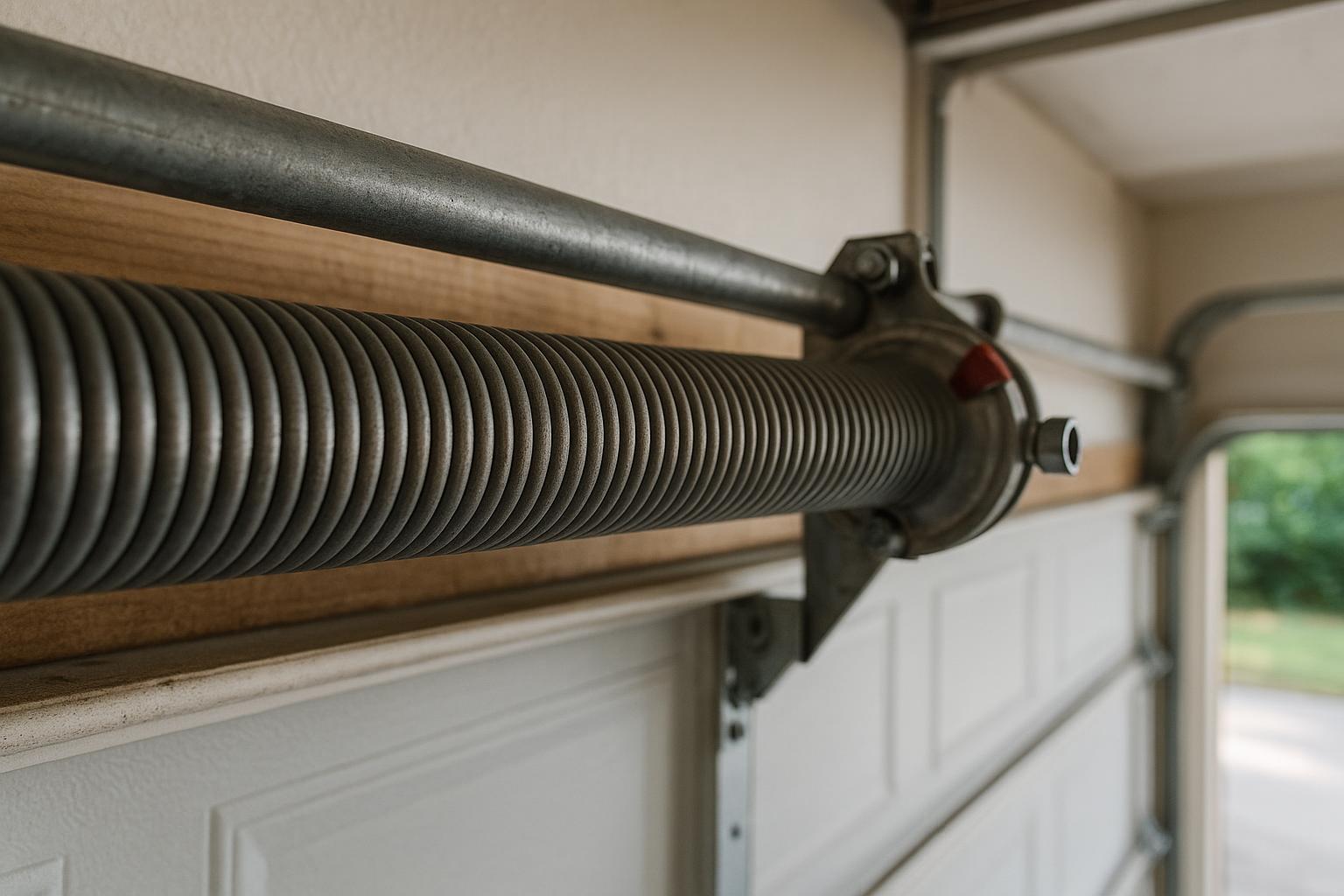
Your Garage Door Springs Do the Heavy Lifting — Literally
Most homeowners in South Euclid don't think much about their garage door springs until something goes wrong. And that's understandable — they're tucked away above the door, quietly doing their job day after day. But here's the thing: your garage door springs are the single most important component in the entire system. They bear the full weight of the door, which can range from 130 to over 400 pounds depending on the material and size.
When springs start to fail, your garage door becomes unreliable at best and dangerous at worst. Knowing the warning signs of worn-out springs can save you from a sudden breakdown, costly emergency repairs, or even a serious injury. Here's what every homeowner should know.
How Garage Door Springs Work
Before we get into the warning signs, it helps to understand what your springs actually do. There are two main types of garage door springs:
- Torsion springs: These are mounted on a metal shaft directly above the garage door opening. They use torque to lift and lower the door in a controlled manner. Most modern residential doors in South Euclid and surrounding areas like Lyndhurst and University Heights use torsion springs.
- Extension springs: These run along the horizontal tracks on either side of the door. They stretch and contract to provide lifting force. They're more common on older installations.
Both types are under extreme tension, which is why spring replacement is one of those jobs best left to trained professionals. But recognizing the signs of wear? That's something every homeowner can and should do.
7 Warning Signs Your Garage Door Springs Are Failing
1. The Door Feels Heavier Than Usual
Try this simple test: disconnect your garage door opener by pulling the emergency release cord, then manually lift the door about halfway. A properly balanced door with healthy springs should stay in place on its own. If it feels unusually heavy or slams down the moment you let go, your springs are likely losing tension and need attention.
2. The Door Opens Unevenly or Crooked
If one side of your garage door rises faster than the other, it often means one spring has weakened more than its counterpart. This uneven movement puts extra stress on your tracks, cables, and opener, which can lead to a cascade of additional problems if left unaddressed.
3. You Hear a Loud Bang from the Garage
Did you hear what sounded like a gunshot or a car backfiring coming from your garage? That's the telltale sound of a spring snapping. A broken torsion spring will usually remain on the shaft, but a broken extension spring without safety cables can become a dangerous projectile. If you hear this sound, do not attempt to operate the door. Call a professional right away.
4. There's a Visible Gap in the Spring
Take a look at the torsion spring above your garage door. When a spring breaks, you'll typically see a clear gap — usually a few inches wide — where the coils have separated. This is the most obvious visual confirmation that your spring has snapped and needs immediate replacement.
5. Your Garage Door Opener Is Struggling
Your opener is designed to guide the door, not lift it. The springs handle the heavy lifting. If your opener motor is straining, making grinding noises, or stopping partway through the cycle, failing springs may be forcing it to work far harder than it should. Continuing to run the opener under these conditions can burn out the motor entirely.
6. The Door Won't Open at All
This is the scenario most homeowners dread — especially on a cold Cleveland Heights morning when you're trying to get to work. If your garage door simply won't budge when you press the button, a broken spring is one of the most common causes. The opener alone doesn't have the power to lift the full weight of the door without functioning springs.
7. Your Springs Are More Than 7-10 Years Old
Standard garage door springs are rated for approximately 10,000 cycles, with one cycle being a single open-and-close. For the average household that uses the garage door two to four times a day, that works out to roughly seven to ten years of service life. If your springs are in that age range and you're noticing any of the symptoms above, replacement is likely overdue.
Why You Shouldn't Wait to Replace Worn Springs
We understand the temptation to put off a repair that isn't causing an immediate crisis. But when it comes to garage door springs, procrastination can be costly:
- Safety risk: A door with failing springs can drop unexpectedly. A standard two-car garage door weighs around 200 to 300 pounds — more than enough to cause serious injury.
- Damage to other components: When springs aren't doing their job, the strain transfers to your cables, tracks, and opener motor. What starts as a spring issue can quickly turn into a much more expensive repair.
- Getting stranded: A broken spring can leave your car trapped inside the garage or leave your home unsecured with the door stuck open.
Homeowners throughout Beachwood, Richmond Heights, and the greater South Euclid area count on their garage doors working reliably every single day. Proactive spring replacement keeps things running smoothly and avoids those stressful emergency situations.
Can You Replace Garage Door Springs Yourself?
We'll be straightforward: this is not a recommended DIY project. Garage door springs are under enormous tension, and improper handling can result in serious injury or death. Every year, emergency rooms across the country treat people who attempted spring replacement without the proper tools, training, or experience.
A qualified technician has the specialized winding bars, safety equipment, and expertise to replace springs quickly and safely. The job typically takes less than an hour for a professional, and it ensures your door is properly balanced and calibrated when the work is done.
What to Expect During a Spring Replacement
If you schedule a spring replacement with a reputable garage door company, here's what the process generally looks like:
- The technician inspects the entire door system — springs, cables, rollers, tracks, and hardware.
- The old springs are carefully unwound and removed.
- New springs rated for your door's specific weight and size are installed.
- The springs are wound to the correct tension and the door is balanced.
- The technician tests the door through several cycles to ensure smooth, safe operation.
At South Euclid Garage Door, we also take the time to inspect your cables and other hardware during every spring replacement. Since these components work together as a system, it makes sense to address any additional wear while we're already on-site.
Keep Your Garage Door Running Safely and Reliably
Your garage door is likely the largest moving object in your home, and the springs are what make it manageable. Paying attention to the warning signs we've covered — uneven movement, unusual sounds, a heavy door, or springs that are simply past their prime — can help you stay ahead of a breakdown.
If you're in South Euclid or any of the nearby communities and you've noticed any of these issues, don't wait for a complete failure. Reach out to our team for a thorough inspection. We'll give you an honest assessment, fair pricing, and the peace of mind that comes with knowing your garage door is safe and reliable.