
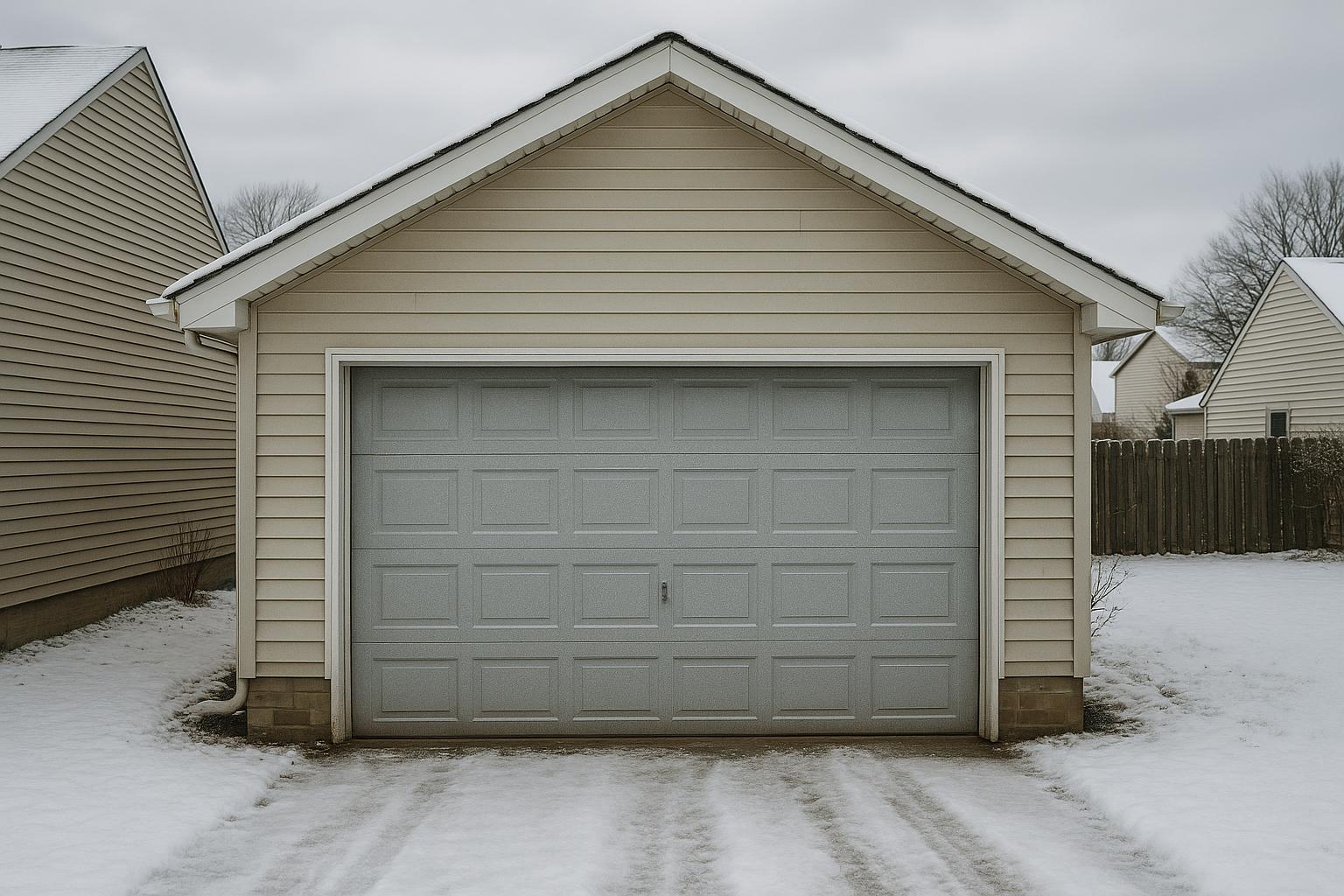
Winter and Your Garage Door: A Common Northeast Ohio Problem
If you've ever walked into your garage on a freezing South Euclid morning, pressed the button on your opener, and heard nothing but a strained hum — or worse, complete silence — you're not alone. Cold weather is one of the most common culprits behind garage door failures, and living in Northeast Ohio means dealing with temperatures that can plunge well below freezing for weeks at a time.
The good news is that most winter-related garage door problems have straightforward causes and solutions. In this post, we'll walk you through the most common reasons your garage door won't open when temperatures drop, what you can safely troubleshoot on your own, and when it's time to call in a professional.
Why Cold Weather Affects Your Garage Door
Your garage door system is made up of metal components, lubricants, electrical parts, and weatherstripping — all of which respond to temperature changes. When the mercury drops, several things can go wrong simultaneously. Understanding the root cause is the first step toward getting your door working again.
1. Metal Components Contract
Steel tracks, springs, and hardware all contract slightly in cold weather. While this contraction is minimal, it can be enough to cause binding, misalignment, or increased friction. If your tracks were already slightly off or your springs were nearing the end of their lifespan, winter temperatures can push them past the tipping point.
2. Lubricant Thickens or Freezes
The grease and lubricant on your springs, rollers, and hinges can thicken significantly in freezing temperatures. When lubricant becomes too viscous, it creates resistance instead of reducing it. Your opener motor has to work harder, and in some cases, it simply can't generate enough force to move the door.
This is one reason why seasonal maintenance before winter arrives is so important for homeowners in South Euclid and surrounding areas like Cleveland Heights and Lyndhurst. A technician can apply cold-weather-rated lubricant that stays fluid even when temperatures drop into the single digits.
3. Weatherstripping Freezes to the Ground
The rubber weatherstripping along the bottom of your garage door is designed to create a seal against moisture and drafts. But when water collects beneath the seal and freezes overnight, your door can literally freeze to the garage floor. If you try to open the door with the opener while it's frozen down, you risk damaging the weatherstripping, the opener motor, or both.
4. The Opener Motor Struggles in Extreme Cold
Garage door openers are electromechanical devices, and extreme cold can affect their performance. The motor may run sluggishly, the circuit board can behave erratically, and the force settings that worked fine in September may not be sufficient in January. Some older openers simply aren't built to handle the kind of sustained cold we experience here in Northeast Ohio.
5. Broken Springs Go Unnoticed
Springs can break at any time of year, but cold weather increases the likelihood because the metal becomes more brittle. A broken spring might not be immediately obvious — your door might just feel impossibly heavy or your opener might strain and fail. If your door won't budge at all, a broken spring could be the reason, regardless of the temperature outside.
What You Can Safely Do Yourself
Before calling for professional help, there are a few things you can check safely:
- Check for ice along the bottom seal. If the weatherstripping is frozen to the floor, try using a heat gun or hair dryer on a low setting to gently melt the ice. Never try to force the door open or chip at the ice with sharp tools, as you can tear the seal.
- Inspect the tracks for visible obstructions. Snow, ice, or debris can sometimes get into the tracks and prevent the rollers from moving freely. Clear anything you can see.
- Try operating the door manually. Pull the emergency release cord (the red handle hanging from the opener rail) and try lifting the door by hand. If it moves smoothly, the issue is likely with your opener. If it feels extremely heavy or won't move at all, you may have a spring or hardware problem.
- Check your opener's power source. It sounds simple, but power outages and tripped breakers are common during winter storms. Make sure the outlet your opener is plugged into has power.
- Look at the remote and wall button batteries. Cold weather drains batteries faster. Replace the batteries in your remote and see if that solves the problem.
When to Call a Professional
Some winter garage door problems are beyond the scope of a safe DIY fix. You should call a professional if:
- The door feels extremely heavy when you try to lift it manually — this almost always indicates a broken spring, which is dangerous to repair without proper tools and training.
- You hear grinding, popping, or snapping sounds when the door tries to move.
- The door opens partway and then stops or reverses.
- The tracks appear bent, warped, or significantly misaligned.
- Your opener motor runs but the door doesn't move — this could indicate a stripped gear or a disengaged drive.
Attempting to repair springs, cables, or tracks on your own can result in serious injury. These components are under extreme tension, and they require specialized knowledge to handle safely.
Preventing Winter Garage Door Problems
The best way to avoid getting stuck with a non-functioning garage door in the middle of a South Euclid winter is to take preventive steps before the cold sets in:
- Schedule a fall maintenance appointment. A professional tune-up includes lubrication with cold-weather-appropriate products, spring inspection, track alignment, and opener testing.
- Replace worn weatherstripping. New, flexible weatherstripping is less likely to freeze to the ground and provides a better seal against cold air and moisture.
- Keep the area around the bottom of the door clear. Shovel snow and clear standing water away from the base of your garage door to minimize the chance of freeze-bonding.
- Upgrade an aging opener. If your opener is more than 15 years old and struggles every winter, a modern unit with better cold-weather performance and battery backup can save you a lot of frustration.
- Test your door monthly. Run the door through a full open-and-close cycle and listen for unusual sounds. Catching small problems early prevents big failures later.
South Euclid Garage Door Is Here When You Need Us
Winter doesn't wait, and neither should you. Whether your garage door is frozen shut, your opener is struggling against the cold, or you suspect a broken spring, our team serves homeowners throughout South Euclid, University Heights, Beachwood, Richmond Heights, and the surrounding communities. We show up on time, diagnose the problem accurately, and get your door working again so you can get on with your day.
If your garage door is giving you trouble this winter — or if you'd like to schedule preventive maintenance before the next cold snap — give South Euclid Garage Door a call. We're here to help.